Why TCPA Compliance Matters for SMS Marketing
Text messages get read. Studies on SMS engagement consistently show open rates well above 90%, often within minutes of delivery — which is exactly why texting leads has become one of the fastest ways to start a real conversation. But that same directness is why SMS marketing is regulated more strictly than almost any other outreach channel.
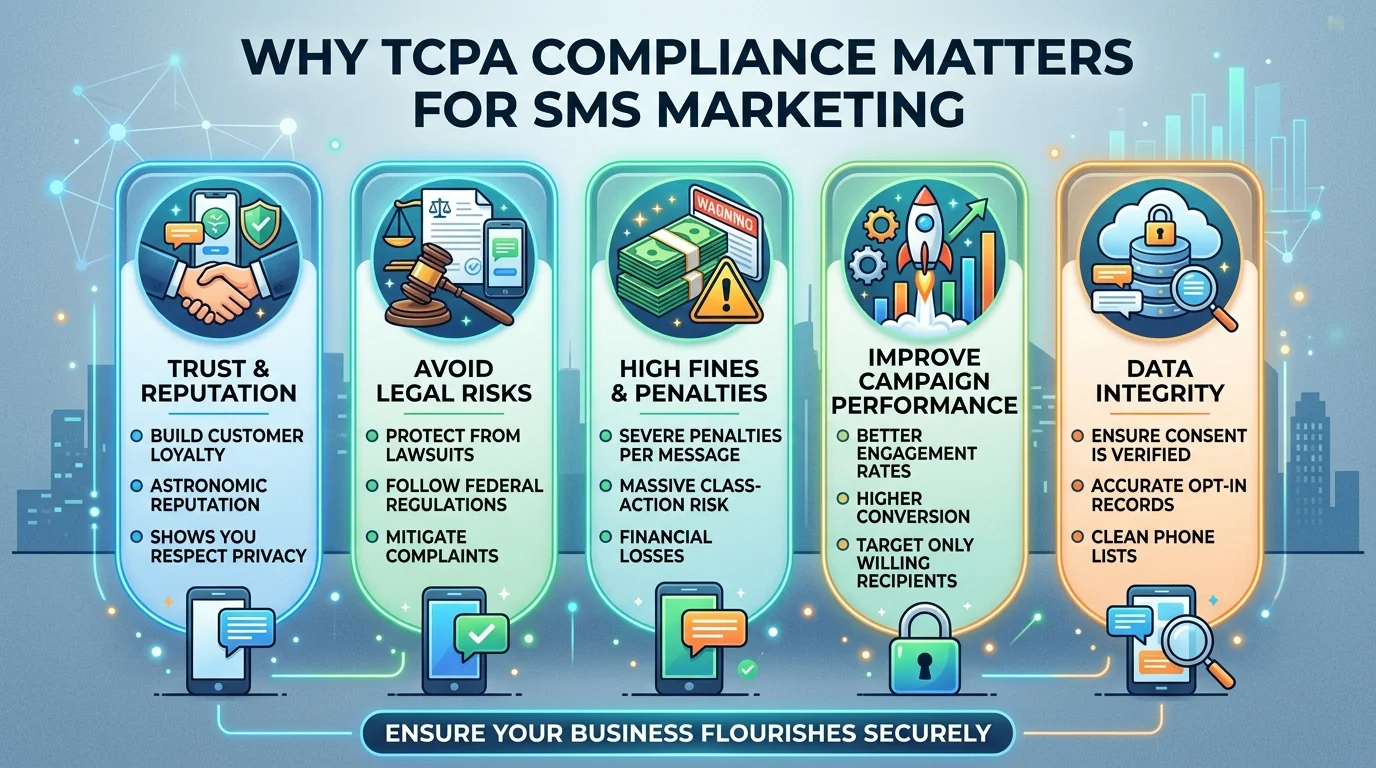
In the United States, texting leads and customers falls under the Telephone Consumer Protection Act (TCPA). Violations aren't small — statutory damages run from $500 to $1,500 per unsolicited text, and class-action lawsuits over bulk SMS campaigns are common. A single poorly-run campaign to a few thousand contacts can turn into a six- or seven-figure liability. Understanding the basics before you send your first campaign isn't optional — it's the difference between a growth channel and a legal exposure.
Do You Need Consent Before Texting a Lead?
Generally, yes. The TCPA requires prior express consent to send marketing text messages, and for certain message types (like automated marketing texts sent via an autodialer), the bar is higher: prior express written consent. In practice, this means you need a clear, documented basis for texting each person on your list — not just a phone number you found or purchased.
Valid consent typically comes from one of a few places: someone filled out a form and explicitly agreed to receive texts, they texted you first, or they gave verbal or written consent during a real transaction or inquiry (like requesting a property valuation or filling out a "text me" opt-in on your website). What doesn't count: scraping numbers from public records, buying a cold list, or assuming consent because someone is a "lead" in your CRM.
How to Properly Collect Consent
- Use clear opt-in language. Don't bury SMS consent in dense legal text — state plainly that by submitting the form, the person agrees to receive text messages, and roughly how often.
- Keep a record. Log the date, time, source, and method of consent for every contact. If a complaint or lawsuit ever surfaces, this record is your primary defense.
- Don't rely on implied consent from old data. A number sitting in a spreadsheet from a lead source two years ago is not a safe basis for a new campaign today.
- Segment purchased or scraped lists separately — and treat them as not consented unless you can verify otherwise. When in doubt, leave it out.
Honoring Opt-Outs the Right Way
Every marketing text should make it easy to stop receiving messages — typically by replying STOP. Once someone opts out, the TCPA requires you to honor that request immediately and permanently for that number, not just for the current campaign. Continuing to text someone after a STOP reply is one of the most common (and easiest to prove) violations, because the STOP reply itself becomes evidence.
This is also where manual SMS processes tend to break down — if opt-outs are tracked in a spreadsheet or depend on someone remembering to update a list by hand, it's only a matter of time before a STOP gets missed. Automating opt-out handling at the platform level removes that risk entirely.
Common Mistakes That Trigger Complaints
- Texting outside reasonable hours (before 8am or after 9pm in the recipient's time zone is a frequent trigger for complaints, even where not explicitly illegal).
- Sending the same message to a purchased list with no verifiable consent trail.
- Failing to identify who's texting — a message with no clear sender identity feels more like spam and draws more complaints.
- Re-texting a number after it's opted out, even accidentally, because it was re-imported from an old list.
How Investor Lead System Helps You Stay Compliant
SMS compliance is easiest when it's built into the tool you're already using to send, not bolted on afterward. Investor Lead System automatically detects and honors STOP-keyword opt-outs across every campaign, so a contact who opts out never receives another message from your account — no manual list maintenance required. Every campaign also keeps a full send and reply history, which doubles as a record if you ever need to demonstrate good-faith compliance efforts.
Whether you're running SMS campaigns for real estate lead generation, e-commerce promotions, or general digital marketing outreach, the underlying compliance requirements are the same — and having them handled automatically means you can focus on the message, not the legal risk.
Create a free account and see how compliant SMS campaigns work in practice, or check out our pricing to find the right plan for your outreach volume.
This article is for general informational purposes only and isn't legal advice. TCPA compliance requirements can vary by situation, and penalties for violations are significant — consult a qualified attorney about your specific SMS marketing practices before sending campaigns at scale.